

Introduction
Industrial processes depend on accurate and dependable valve operation to control the movement of liquids, gases, steam, and other materials. Manual valve operation can be inefficient when valves are installed in difficult locations or need to operate frequently. This is where Pneumatic Valve Actuators provide an effective automation solution. They use compressed air to generate mechanical movement that opens, closes, or positions a connected valve. Depending on the design, the actuator can produce linear or rotary movement and can be integrated with control systems for automated operation. Pneumatic actuation is widely valued for its fast response, relatively simple construction, and suitability for demanding industrial environments. Understanding how these devices operate, their main types, and their advantages can help engineers and maintenance teams select an appropriate solution for different process-control requirements.
What Are Pneumatic Valve Actuators?
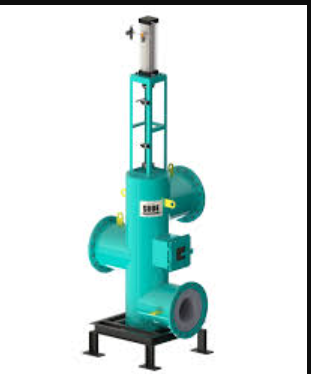
Pneumatic Valve Actuators are mechanical devices that convert compressed-air energy into motion for operating valves. The compressed air acts on a diaphragm, piston, or another internal mechanism, producing force that is transferred to the valve stem or rotating element. This movement allows a valve to be opened, closed, or positioned according to the requirements of the process. Linear designs are commonly associated with valves that require straight-line stem movement, while rotary designs are suitable for quarter-turn valves such as butterfly and ball valves. The actuator itself normally works as part of a larger system that can include air preparation equipment, control valves, solenoid valves, positioners, and sensors. Together, these components allow automated valve operation and can provide consistent control without requiring an operator to manually turn or move the valve.
How Do Pneumatic Valve Actuators Work?
The working principle is straightforward. Compressed air enters a chamber inside the actuator and creates pressure against a piston or diaphragm. The resulting force produces movement, which is transferred mechanically to the valve. In a rotary configuration, a rack-and-pinion mechanism or similar arrangement can convert piston movement into shaft rotation. In a linear configuration, the actuator can move a stem directly. The direction and amount of movement depend on the actuator design and the supplied control signal. A control system can regulate the air supply to change the valve position, making the arrangement useful for both simple on/off applications and more controlled process operations. The actuator may also use springs to return the valve to a predetermined position when air pressure is removed. This makes pneumatic actuation particularly useful when a defined response is required during an air or power failure.
Main Types of Pneumatic Valve Actuators
There are several actuator configurations, with single-acting and double-acting designs being especially common. A single-acting actuator uses compressed air to move the valve in one direction while a spring provides the return movement. This arrangement can establish a fail-open or fail-closed position depending on how the actuator and valve are configured. A double-acting actuator uses compressed air on both sides of its internal piston, allowing air pressure to control movement in both directions. It can provide useful control over opening and closing speed and is often selected when continuous pneumatic control is available. Rotary actuators are frequently paired with quarter-turn valves, whereas diaphragm or piston-based linear actuators are commonly used for valves requiring linear movement. Choosing between these configurations depends on valve type, required torque or force, operating conditions, control strategy, and safety requirements.
Advantages of Pneumatic Valve Actuators
One major advantage of Pneumatic Valve Actuators is their rapid response. Compressed air can produce movement quickly, making pneumatic systems suitable for applications that require frequent valve cycling. Their relatively simple mechanical construction can also make maintenance and troubleshooting manageable when the air supply is properly filtered and regulated. Pneumatic systems are useful in environments where electrical actuation may present challenges, including certain industrial locations with demanding safety requirements. Another benefit is their ability to provide substantial mechanical force from a comparatively compact actuator. They can also be configured with spring-return mechanisms to establish a defined valve position following loss of air pressure. Because pneumatic actuators can be controlled remotely, they reduce the need for workers to approach valves installed in hazardous, hot, or difficult-to-access areas.
Industrial Applications
Pneumatic Valve Actuators are used across many industries where automated flow control is required. In oil and gas facilities, they can operate valves used for isolation, flow management, and process control. Chemical processing plants use them for controlling different process streams where reliable and responsive valve operation is important. Water and wastewater treatment facilities can use pneumatic systems to automate valves throughout treatment and distribution processes. Manufacturing plants also rely on pneumatic actuation for automated equipment and process lines. Food and beverage facilities may use appropriately specified pneumatic equipment where frequent cycling and controlled operation are needed. Their broad application range comes from the flexibility of compressed-air systems and the availability of actuator designs suited to different valve sizes and movement requirements. Correct sizing remains important because the actuator must generate enough force or torque to overcome valve resistance under actual operating conditions.
Choosing the Right Actuator
Selecting Pneumatic Valve Actuators requires more than matching an actuator to the physical valve size. Engineers should consider the valve’s required torque or thrust, operating pressure, temperature, process medium, cycling frequency, available air pressure, and required response speed. The desired failure position is also important when evaluating spring-return configurations. For rotary valves, the actuator should provide sufficient torque throughout the complete operating cycle. For linear valves, adequate thrust and stroke are essential. Environmental conditions such as moisture, dust, corrosive substances, and temperature can also affect material and seal selection. Proper sizing helps prevent problems such as incomplete valve movement, excessive wear, slow operation, or unnecessary energy consumption. Manufacturers’ performance specifications should therefore be reviewed carefully before installation.
Maintenance and Reliability
Regular maintenance can help Pneumatic Valve Actuators provide consistent performance over an extended service period. Air quality is especially important because moisture, oil contamination, and particles can affect seals, internal surfaces, and control components. Filters, regulators, and other air-treatment equipment should be inspected as part of a suitable maintenance program. Operators should also check for air leaks, unusual movement, slow response, damaged connections, and changes in operating behavior. Periodic inspection of mounting hardware and valve connections can help identify mechanical problems before they cause operational interruptions. In applications with high cycling rates, wear components may require more frequent inspection. Following the actuator manufacturer’s maintenance recommendations and using compatible replacement components can support dependable operation and reduce unexpected downtime.
Pneumatic Actuators Compared With Other Options
Compared with electric and hydraulic alternatives, pneumatic actuation has characteristics that make it attractive for particular industrial applications. Electric actuators can offer precise positioning and convenient electrical integration, while hydraulic systems can provide very high force. Pneumatic equipment, however, can offer fast movement, compact construction, and straightforward operation where a reliable compressed-air supply is already available. The best choice depends on the process rather than on one technology being universally superior. Factors such as available utilities, required force, positioning accuracy, operating environment, safety requirements, maintenance resources, and total operating cost should all be evaluated. A properly engineered pneumatic system can provide dependable valve automation when its capabilities match the application’s requirements.
Future Role in Industrial Automation
As industrial facilities continue to adopt automated monitoring and control systems, pneumatic actuation remains relevant. Modern control equipment can combine pneumatic mechanisms with sensors, electronic positioners, programmable controllers, and feedback systems. These combinations can improve monitoring and provide better information about valve position and system performance. Developments in control technology can also make pneumatic systems more responsive and easier to integrate into larger automation architectures. Although compressed-air generation has energy costs, careful system design, leak reduction, pressure optimization, and efficient control strategies can improve overall performance. The continuing need for reliable process automation means pneumatic actuation is likely to remain an important technology in many industrial environments.
Conclusion
Pneumatic Valve Actuators offer a practical way to automate industrial valve operation by converting compressed air into controlled mechanical movement. Their fast response, flexible configurations, and suitability for demanding applications make them valuable across manufacturing, water treatment, chemical processing, energy, and other sectors. Single-acting, double-acting, linear, and rotary designs provide options for different valve requirements and operating conditions. Selecting the correct actuator requires careful consideration of force, torque, air pressure, valve characteristics, environmental conditions, and fail-safe requirements. With appropriate sizing, installation, air quality management, and maintenance, pneumatic actuation can provide reliable and repeatable valve control for a wide range of industrial processes.